Digital Archives 2026

The summer school "Digital Archives - Digitisation and Data Workflows" is a 5-day, practice-oriented course aimed at people working in audiovisual archives as well as at everyone else who is interested in enhancing their knowledge about digital environments and processes related to digital archives.

Date: 14 - 18 September 2026Language: English
Number of participants: 20Location: Filmuniversität Babelsberg KONRAD WOLF / Bundesarchiv Lichterfelde
Costs: 780 EUR* Early Bird before 15 April 2026: 730 EUR 

*Students receive a discount of 10% percent of the regular price (702 EUR).

In the fourth summer school edition, we will focus on digitization processes and the technical metadata that they generate. We will hear input lectures on topics such as planning and prioritization, evaluation, and disposal of digitized material. There will also be an introduction to cataloging with a focus on technical metadata. We will be guided by the resources of the Cataloguing and Documentation Commission of the FIAF. The final part will deal with data governance in the field of Artificial Intelligence. We will learn how to set up our own open AI instance with relatively little effort.

"Digital Archives" Summer School in collaboration with Bundesarchiv and FINA as well as with support from the International Federation of Film Archives (FIAF)

Registration is now open. You can register here (registration deadline: 12 July 2026).

Programme Description

14 September 2026: Film University Babelsberg KONRAD WOLF
On Monday, we welcome the new participants to the course and present the content. At the beginning, each person presents their own situation or questions/case studies. Topics such as workflows, decisions on formats, prioritization of film/video elements, and best practices should already be discussed at this point. Part of this should/could also be the presentation of one's own institution, so that needs and solutions become clearer, if desired. Questions about the possible de-acquisition of digital copies in times of cost-intensive storage systems and ecological problems should also be discussed. We will carry out group work, which will then be presented and discussed.

15 September 2026: Film University Babelsberg KONRAD WOLF
Tuesday will be dedicated to cataloguing and metadata management. There will be an introduction to cataloguing (EN 15907) and RDF using the projects in the FIAF Cataloguing and Documentation Commission like the FIAFKnowledge Graph. After introductory talks, we will use MediaInfo and FADGI tools like embARC in smaller groups.

This workshop focused on the documentation of film digitisation and restoration processes, and on the integration of technical and descriptive metadata within archival collection management systems. Via presenting a structured restoration workflow schema, documented as preservation events within its CMS. 

A key component of the workshop will be an analysis of which technical data should be preserved beyond the lifespan of a restoration project, digitised and born digital av object, distinguishing between minimal and optimal metadata sets. Participants were introduced to a preservation events model that embeds restoration workflows within existing archival standards.

The proposed model treats documentation and collecting technical metadata as an integral part of the workflow, distributed among all participants involved in the restoration process. It encourages the reuse of data already present in collection management systems and, where possible, automated metadata retrieval, including the use of tools such as embARC and from the software used in digitisation and restoration.

16 September 2026: Bundesarchiv
On Wednesday we will meet at the Bundesarchiv in Lichterfelde (Berlin). We will have a tour through the building, visit the access digitisation scanners and will also learn about the preservation digitisation infrastructure in place in the Bundesarchiv. Participants will have the chance to talk to our staff and discuss topics like digitisation, data management and long term archiving. In the afternoon we are treated to a lecture with Dr. Robert Erdmann (Amsterdam/Paris) on the usage of AI in arts preservation. Social dinner nearby.

17 September 2026: Film University Babelsberg KONRAD WOLF
On the fourth day, we are introduced to local and open source AI setups, responsible AI / IA, vocabulary and basics. We will discuss potential usage of AI in our archive and where we should rather not use it. There will also be a group work on how to write a strategy for your own institution, which will then be discussed. You will also learn to set up your own local AI if you are interested.

18 September 2026: Film University Babelsberg KONRAD WOLF
We will conclude our course by discussing the last days, collecting feedback and comments from the group.

Instructors

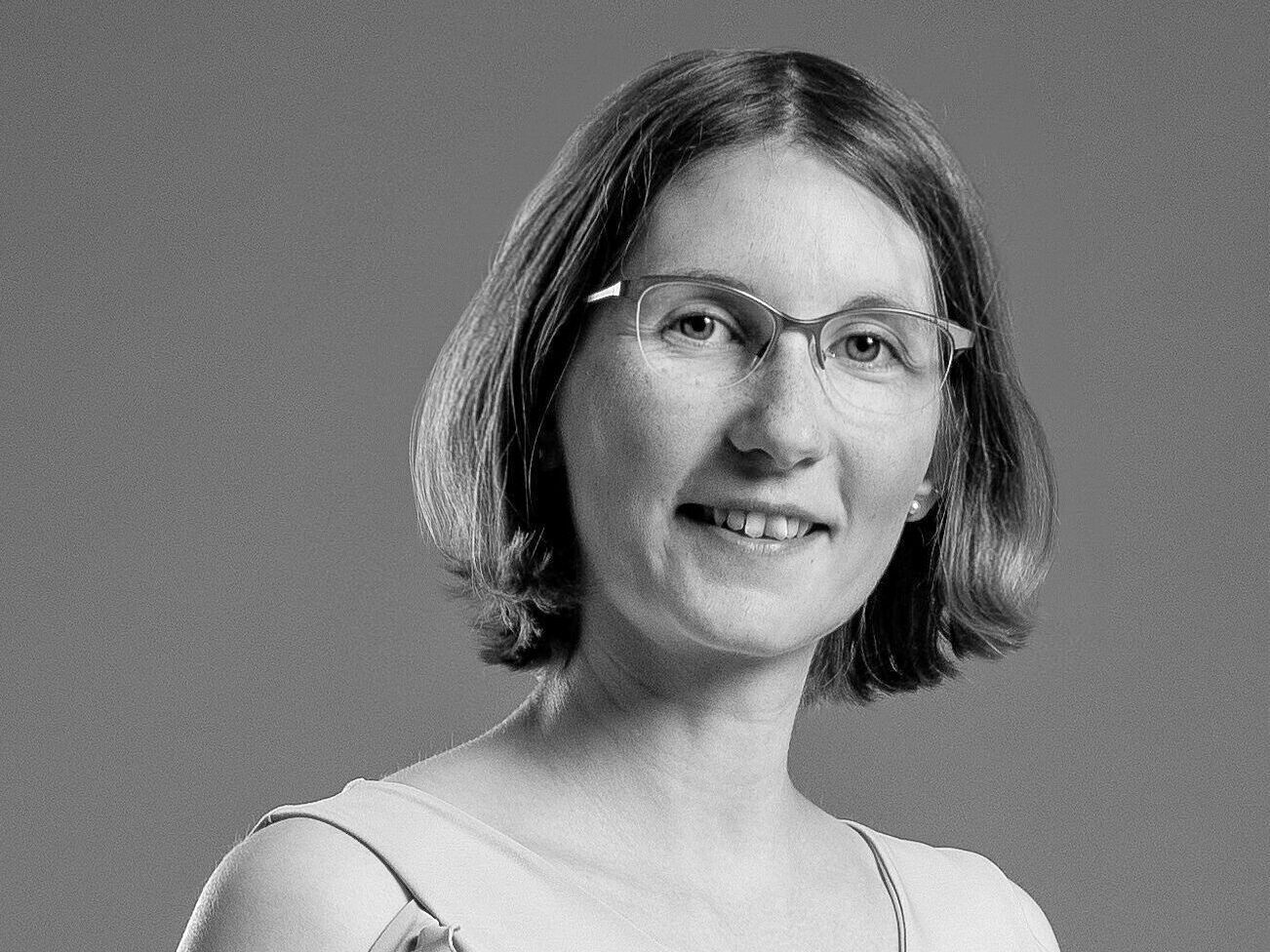
Dr. Adelheid Heftberger (opens enlarged image)

Dr. Adelheid Heftberger

Dr. Adelheid Heftberger is deputy head of the Film Archive in the Bundesarchiv in Berlin. In the past, she worked as a researcher, curator, and archivist at Brandenburg Center für Media Studies in Potsdam and at the Austrian Filmmuseum in Vienna. She holds a PhD in Slavic Studies and obtained an Master degree in Comparative Literature from the universities of Innsbruck and Vienna. In 2016, she completed her M.A. of Library and Information Sciences at Humboldt-Universität zu Berlin. She is head of the FIAF Cataloguing & Documentation Commission and actively supports the Open Science movement.
Elżbieta Wysocka  (opens enlarged image)

Elżbieta Wysocka

Elżbieta Wysocka is a restorer and researcher specializing in film, video and digital art. Trained in painting conservation and intermedia, she authored award-winning MA and PhD theses on audiovisual and media art preservation. She has led national and international projects in film restoration, digitisation, cataloguing and digital preservation at the at the National Film Archive – Audiovisual Institute. She also guided the development of the Media Asset Management at FINA. A member of the FIAF Cataloguing and Documentation Commission, she also worked as film restorer at Deutsche Kinemathek (FFE Program). Since October 2024, she has been Director of Digital Collections and Digitisation at FINA.
Florian Wrobel (opens enlarged image)

Florian Wrobel

Florian Wrobel is technical coordinator at Filmarchiv Austria, Vienna, where he is responsible for the workflows of all restorations and digitizations, including identification and selection of film elements, preparation, scanning, postproduction and data storage.In 2009, he began working at the archive of the Austrian Film Museum in Vienna and left in 2015 as head of the film collection.Also in 2015, he started as head of the Federal Archives' analogue film lab in Hoppegarten, Berlin and remained there until its closure in 2019. In addition to organizing the laboratory, he was also involved in the planning and conceptual design of the digital archive. Since 2025 he is an active member of the FIAF Technical Commission.
Peter Bubestinger (opens enlarged image)

Peter Bubestinger

Peter Bubestinger studied media informatics (TU Vienna) and has been working in the field of digital long-term archiving since 2002, where he is internationally commissioned as a trainer, lecturer, and developer. Initially, he set up/co-developed products for television and radio archives, but then specialized in paid “open” solutions for archiving purposes. Among other things, he discovered and improved the lossless video codec “FFV1” while developing the video digitization system for the Austrian Media Library. Since 2015, he has been managing the company “ArkThis AV-RD,” which offers services related to professional open source use in the archiving sector.

Additional Instructors

Dr. Robert Erdmann (opens enlarged image)

Dr. Robert Erdmann

Dr. Robert Erdmann is a senior scientist at the Rijksmuseum and professor at the University of Amsterdam, where he holds the Chair of Conservation Science. He is also endowed professor for the Visualization of Art History at Radboud University Nijmegen. His work combines computer vision, machine learning, image processing, materials science, and visualization to preserve, analyze, and make accessible visual artistic heritage. Erdmann played a key role in the Bosch Research and Conservation Project, contributing to the development of advanced imaging and visualization techniques applied to the complete oeuvre of Hieronymus Bosch. He is director of the Threadneedle Counting Automation Project (TCAP) and is responsible for the digital infrastructure of the Bosch Research and Conservation Project. Previously, he worked in computational materials science at Sandia National Laboratories and taught applied mathematics and materials science at the University of Arizona.
Oliver Danner (opens enlarged image)

Oliver Danner

Oliver Danner is actively involved in the field of film sound preservation. Since 15 years he is restoring audio for the German federal film archives at Bundesarchiv, freelancing for heritage institutions in Europe and his expertise is sought by students, professionals and FIAF and IASA committees. He is a certified audio technician and graduated in media production and audiovisual conservation.
Roland Fliß (opens enlarged image)

Roland Fliß

Since July 2025, Roland Fliß has been the Head of Film Digitization at Bundesarchiv. In this role, he is responsible for all technical aspects of film digitization. Roland has been involved in film digitization and digital post-production since 1997. He spent several years as a Telecine Operator and Colorist at various companies. From 2009 to 2025, he worked at Cinegrell Postfactory GmbH in Berlin, where he significantly helped build the film restoration department and led it from 2021 until his move to the Bundesarchiv in 2025.
Stephanie Müller (opens enlarged image)

Stephanie Müller

Stephanie Müller is a trained film and video lab technician and lives south of Berlin. She works at the Federal Archives. After her professional training, she prepared 16mm and 35mm analog film for preservation in the film restoration department. She was also able to work in b/w grader and in analog film labortory. For a year, she led the project on the condition of b/w films in the Federal Archives. She then switched to the field of analog film distribution and on-site user support. She is currently working on the BlackMagic scanner and producing digital copies for use. At the same time, she is a member of the B3F project group, which is working on the further development of the film database in the Federal Archives.

Application and Participation

The Digital Archives summer school is directed at staff members of film-related archives and all persons who would like to enhance their knowledge and skills related to digital film archives.

Participants are asked to register online using our application form. Spots are limited and will be awarded based on registration date after assessment of the application and receipt of the participation fee.

The fee covers materials and lunches. Travel and accommodation expenses as well as costs for public transportation to and from Bundesarchiv are not included and must be covered by participants. For our participants we have reserved a room contingent in nearby hotels. Please contact us if you are interested.

FIAF-Scholarship

The International Federation of Film Archives (FIAF) is pleased to award five scholarships of 500 EUR each. These scholarships contribute toward the participation fees; the remaining balance of 230 EUR must be covered by the selected participants. Travel and accommodation expenses are not included and must be paid by the applicants themselves.

Please indicate in your application whether you are applying for a scholarship, and if so, for what reasons:

  • Why is it important for you to participate in the Digital Archives Summer School?
  • What impact will your participation in this training have on your institution or working environment?
  • Why do you need financial support?

Please submit your answers in English to summerschool(at)filmuniversitaet.de. The application deadline for the FIAF scholarship is 08 May 2026.

The Summer School "Digital Archives" is organised by the Filmuniversität Babelsberg KONRAD WOLF (Filmuni Summer School) in cooperation with the Bundesarchiv and FINA with the support of the FIAF Cataloguing & Documentation Commission. It was conceived by Dr. Adelheid HeftbergerJürgen Keiper and Prof. Dr. Chris Wahl.